
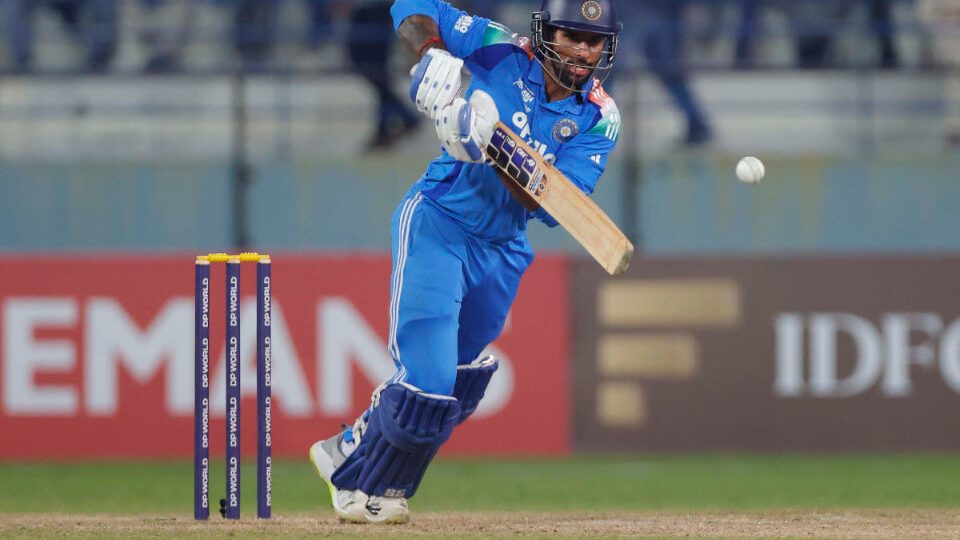
At the West End Park International Cricket Stadium in Doha on Sunday, November 22, Pakistan A set India A a target of 313 runs in the ACC Men’s Asia Cup Rising Stars 2026 Group B match. Chasing the total, India A were restricted to 265 all out in 49.1 overs, falling 48 runs short despite captain Tilak Varma’s unbeaten hundred. The loss marked India A’s second group-stage encounter after their earlier win against Nepal.
Tilak’s innings of 100 off 149 balls contained seven fours and one six, yet his approach reflected the difficulty posed by Pakistan A’s bowling attack and the pitch conditions. The India A captain managed just 3 runs off his first 25 deliveries, a cautious start that set the tone for the entire chase. By the time he had faced 50 balls, Tilak had accumulated between 18 and 21 runs, a slow progression that created pressure on the batting order.
How did Tilak Varma’s slow start affect India A’s chase?
Sanjay Bangar analysed the impact of Tilak’s measured approach on India A’s middle order. The analyst highlighted how a captain’s slow accumulation affects the batter at the other end and the tactical consequences that follow.
“Tilak Varma made 3 runs off the first 25 balls he faced, then in the next 25 balls he scored 12-13 runs. So after playing 50 balls, if you reach 18-21, what is the effect on the batter at the other end? Tilak looked assured that he would make it up at the end, but what effect does that have on the other batter? Will he take risks, or will he be forced to take risks? That creates a wicket-taking opportunity,” Bangar said on Sony Sports Network after the match.
India A’s top order collapsed early in the chase. Ayush Badoni fell for a duck, Kumar Kushagra managed 2 runs, Rinku Singh scored 6, Suryansh Shedge added 6, and opener Vaibhav Sooryavanshi contributed 11 runs. By the 26th over, India A had slipped to 129 for 5, leaving the innings in a precarious position.
Tilak’s partnership with Shahbaz Ahmed provided the only substantial resistance. The pair added 112 runs for the seventh wicket, with Shahbaz Ahmed scoring a half-century in the partnership. India A reached 241 for 7 before Shahbaz’s dismissal in the 43rd over, but the lower order could not sustain the momentum. Vipraj Nigam and Harshit Rana were both dismissed for ducks as India A lost their final wickets quickly.

Clear message’ - Abdul Samad as PAK A beat India A in Doha
What tactical issues did India A face against Pakistan A?
Bangar also identified a tactical oversight in India A’s approach to Pakistan A’s bowling attack. The analyst pointed to a specific decision that allowed one of Pakistan A’s key bowlers to complete his full quota of overs.
“I think the thing that India missed was that they allowed Hasan Nawaz to complete his 10 overs. On such a turning track, certainly an effort should have been made to use the right-left combination, which would have enabled better strike rotation. Then Pakistan would not have got the chance to use Nawaz for all 10 overs,” Bangar said.
Abhishek Sharma’s 42-ball 70, which included 4 fours and 6 sixes, offered brief resistance but arrived too late to alter the outcome. For Pakistan A, Ali Raza took 3 for 56, Hasan Nawaz claimed 3 for 45, and Mohammad Imran finished with 2 for 69, proving too strong for India A’s batting lineup.