
He was struck on the head by a bouncer and had a near-death experience on his Test debut. He was Richard Hadlee’s new-ball partner for much of his international career. He has a pavilion named after him at the Basin Reserve, the spiritual home of New Zealand cricket. And for Indian cricket fans, he remains part of the trivia surrounding the first hat-trick by an Indian in ODI cricket, when Chetan Sharma dismissed him during the 1987 World Cup.
Yet, sitting on the couch at his home in Lower Hutt, a Wellington suburb, Ewen Chatfield, now 76, is more concerned about something far removed from his cricketing achievements. “I miss working,” he says, almost matter-of-factly.
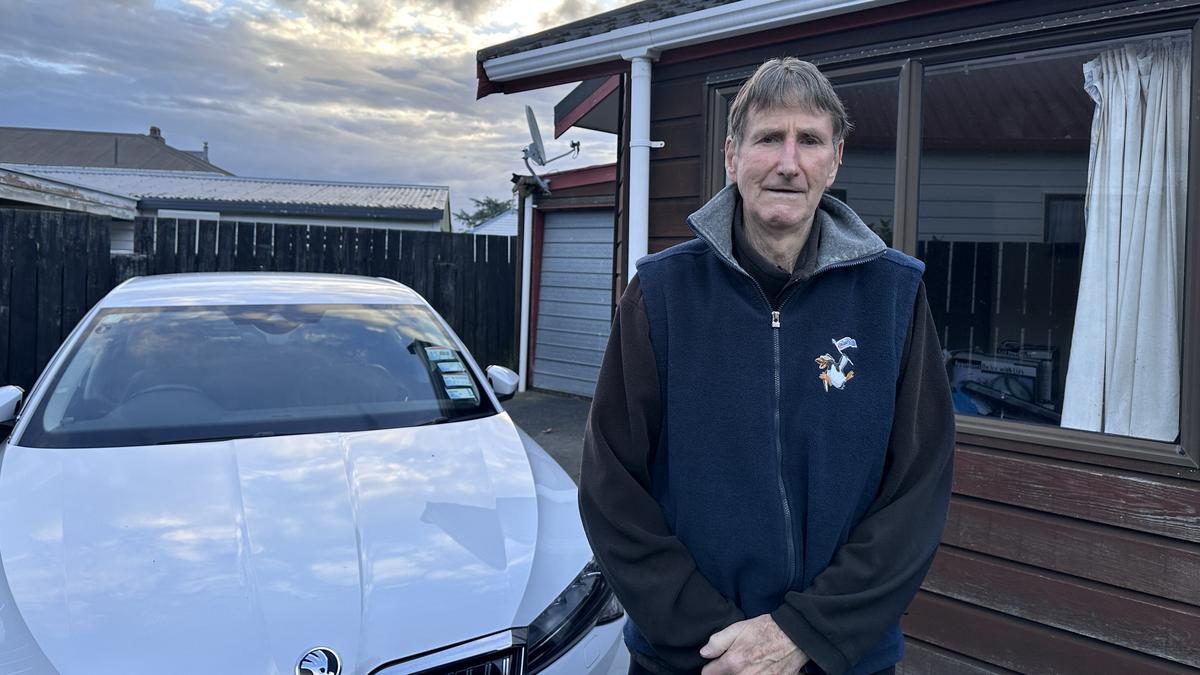
For a man who spent decades playing cricket – even in master’s cricket until he was 76 – and driving taxis for a living after retirement, being confined to home has been an uncomfortable adjustment. A brain bleed has temporarily prevented him from driving, and despite hoping to return soon, his doctor is yet to give him the all-clear.
“I’ve got a bleed on the brain, and so I am not allowed to drive. I thought I was going to go back next week, but I went to the doctor, and he has refused to release me. I have got a few other little check-ups I have got to do before I can start driving again,” he says.
Chatfield has never been one to dwell on past glories. Even after retiring from First Class cricket in 1989, he continued playing in local competitions, coached and managed teams, and eventually returned to the field in veterans’ cricket. Work, in one form or another, remained a constant.
Now, the man whose name adorns a pavilion at the Basin Reserve is forced to take public transport to watch cricket rather than driving himself there.
The taxi driver who never really retired
Chatfield’s decision to drive taxis after his cricket career was a practical necessity. Unlike modern international cricketers, New Zealand’s players in the 1970s and 1980s were largely amateurs. Cricket was a passion, but it did not necessarily pay the bills.
“We didn’t earn very much money. By the time we were playing, it was quite good money. But by the time you are 52, for a whole year, it was putting... So we all went back to work,” he says.
While several contemporaries moved into media or coaching, Chatfield chose a different route. “I wasn’t really into that,” he says.
Driving a taxi became his profession, one he continued for years. Even now, despite being unable to get behind the wheel, he refers to the vehicle parked outside his home as ‘his taxi’.
His First Class career ended in 1989, but he did not immediately walk away from the game. He continued playing for Hutt Valley in the minor association competition for another three years and subsequently took to veterans’ cricket. He played in an Auckland-based team in the over-60s competition in Australia, an experience that helped New Zealand establish its own team in the tournament.
The veterans’ game has since expanded into several age groups, with World Cups becoming part of the calendar. Chatfield eventually decided he had had enough.
“I came back from there one year and I just had enough. So I told the guys I wasn’t playing,” he recalls. He had been turning out for the same club side for around 15 years. When he decided to stop, he meant it. “It’s about eight years next month since I’ve played a game.”
He gave his boots away to the local Wellington Firebirds team to be used for their Man of the Match presentation. It was an understated farewell for a cricketer who had spent years doing the hard yards without seeking the limelight.
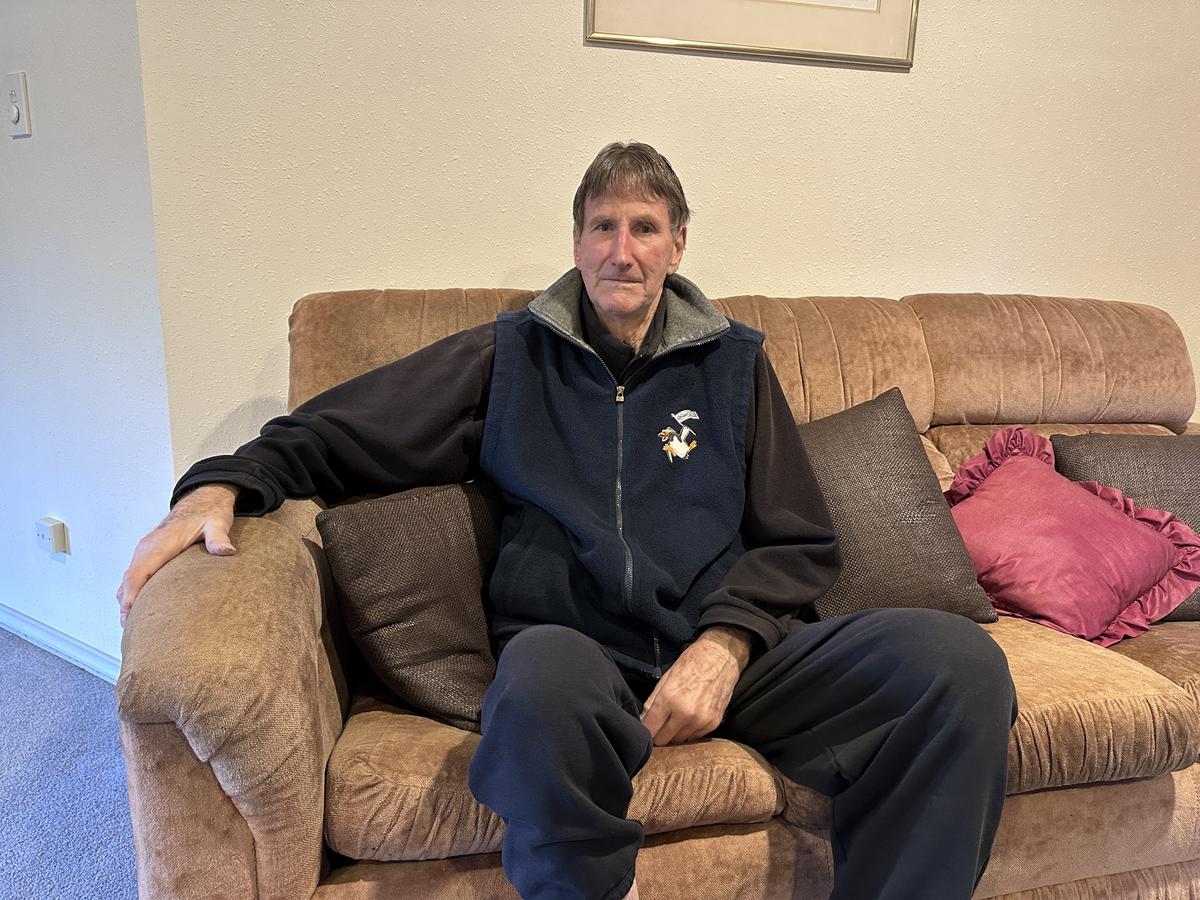
For a man who spent decades playing cricket – even in master’s cricket until he was 76 – and driving taxis for a living after retirement, being confined to home has been an uncomfortable adjustment. | Photo Credit: Amol Karhadkar
The bouncer that nearly ended it all
For all his achievements with the ball, one incident from Chatfield’s career remains among the most frightening episodes in New Zealand’s cricket history.
It happened on his Test debut against England in Auckland in February 1975. New Zealand was fighting to save the match, and Chatfield, batting at No. 11, was doing precisely what was expected of him: hanging around. England had dominated the contest and reduced New Zealand to nine wickets down.
Chatfield and Geoff Howarth had batted towards the end of the fourth day, with a rest day to follow. The hosts were hoping to survive long enough to force a draw.
On the fifth morning, England was still unable to finish the innings. Then Peter Lever bowled a short delivery that Chatfield attempted to negotiate. The ball flew off the top of his bat and struck him on the head. There were no helmets in those days.
Chatfield lost consciousness, and his tongue obstructed his airway. Derek Underwood, the England left-arm spinner, sensing the seriousness of the situation, called for England physiotherapist Bernard Thomas, who helped clear his airway.
“He poked my tongue out so that I could get some air in,” Chatfield recalls. “I woke up on the way to the hospital in the ambulance. All the questions they asked me, I knew what the score was, what my score was, what Geoff’s score was and what had happened. So that sort of made everybody a little bit happier than they could have been.”
Lever and England manager Alec Bedser visited him in hospital. The bowler, making his own Test debut, was deeply shaken. “He looked worse than I did. He thought he had killed me,” Chatfield says. Remarkably, the incident did not change his outlook towards batting or fast bowling. “No, not really,” he says when asked whether the experience altered his perspective.
Hadlee subsequently brought him a cycling helmet. It was hardly the sophisticated protective equipment modern batters take for granted, but it offered some protection. “It was a terrible thing, but at least it did the job,” he says.
Chatfield was hit on the head again during his career, but the incident on debut remained the most serious.
The ball that made Chetan Sharma history
For Indian cricket fans, Chatfield is also part of one of the most memorable moments in the country’s ODI history. On October 31, 1987, at the Reliance World Cup in Nagpur, Chetan Sharma became the first Indian to take a hat-trick in international cricket, dismissing Ken Rutherford, Ian Smith and Chatfield in consecutive deliveries against New Zealand.
Chatfield was the last victim. He remembers the match, although his recollection of the dismissal is characteristically uncomplicated. “I was part of everything,” he says when reminded of the occasion.
Chatfield recalls he had not been expected to bat at No. 10. “I was meant to be number 11 and Willie Watson was meant to be number 10. He was still getting changed to go in the back because we had lost it so quick that he wasn’t ready,” he recalls.
Asked about the delivery that dismissed him, Chatfield offers a small technical correction to the popular recollection. “It came off the bat but down the leg side. It was a very fine flick, a very fine glance. Today it would have been a wide, but it’s not a wide now anymore,” he says.
Chatfield was also part of New Zealand’s squad for the controversial 1981 triangular series final against Australia at the Melbourne Cricket Ground, although he did not play, with Martin Snedden taking his place. He was close enough to the dressing-room fallout to remember the anger after Trevor Chappell was forced to bowl underarm by his captain and brother Greg to prevent New Zealand from hitting the six required off the final delivery.
“There were a few broken bottles and broken cups and things flying around the dressing room. People weren’t happy,” he says. “We would never have done it anyway, but it just seems that the same rules should have applied throughout the series and then they should have changed it after that. But they didn’t do that,” he says.
Living alongside Richard Hadlee
While the Chetan Sharma hat-trick and the near-fatal blow on debut have kept Chatfield’s name alive in cricket conversations, his most significant contribution to New Zealand cricket came through his partnership with Richard Hadlee.
For much of the 1980s, Chatfield was entrusted with sharing the new ball with one of the finest fast bowlers the game has seen. It was not an automatic arrangement from the beginning. In the late 1970s, Chatfield and Lance Cairns competed for the second fast-bowling spot alongside Hadlee.
Despite often being in good form in domestic cricket, Chatfield found himself in and out of the side as New Zealand struggled. The transition came after New Zealand’s major tour of Australia, when selectors introduced a group of younger players, including Ian Smith, Martin Snedden and John Bracewell. The team largely stayed together through the 1980s. “I was never quick, nowhere near as quick as Richard was,” he says.
The arrangement was also influenced by Wellington’s notorious wind. Chatfield has often been associated with bowling into it, allowing Hadlee to operate with it behind him. But he insists that the perception is exaggerated.
“I enjoyed opening the bowling into the wind. But then for Wellington, which is my own team, I generally bowled downwind,” he explains. “It’s a little bit of a myth that I actually bowled a lot into the wind. Which I didn’t really. But I bowled the majority of my overs downwind,” he says.
Their roles complemented each other. Hadlee was the strike bowler, expected to attack and take wickets. Chatfield’s job was to keep things tight at the other end, build pressure and ensure the opposition could not simply wait for Hadlee’s spells to end. “I had a job of basically tying up the end. Richard attacked at the other end. It suited me down the ground because that’s the way I bowled,” he says.
There was little need for elaborate conversations about who had the better rhythm or who should take the lead. Hadlee was rarely off his game, and the rest of the attack understood the need to contribute around him. “It wasn’t very often that Richard didn’t bowl well,” Chatfield says.
He recalls the 1987 Test against the West Indies in Christchurch when Hadlee had an unusually poor start and Chatfield claimed the first four wickets. Hadlee returned later and took the remaining six. “He did realise that I’d sort of done all right. So I led the team off the field. He allowed me to do that,” Chatfield says, with a laugh.
The respect was mutual. Hadlee’s presence motivated the rest of the attack, but the team did not expect him to do everything. “We all wanted to win the whole thing. Although we were only amateurs, we were all working in jobs and so on. But we relied on him to do a lot of donkey work, if you like, and get wickets for us. And we just chipped in to help him out because he can’t bowl all day,” he says.
Chatfield’s uncomplicated approach carried into one-day cricket. He relied on the same line and length that had made him an effective Test bowler. He remembers the early days of ODI cricket fondly, particularly playing under lights in Australia’s triangular series. He also recalls his remarkable spell against Sri Lanka in Dunedin, when he returned figures of one for eight in 10 overs. “It should have been seven runs because my captain misfielded it a bit,” he says, unwilling to let even that record stand without a qualification.
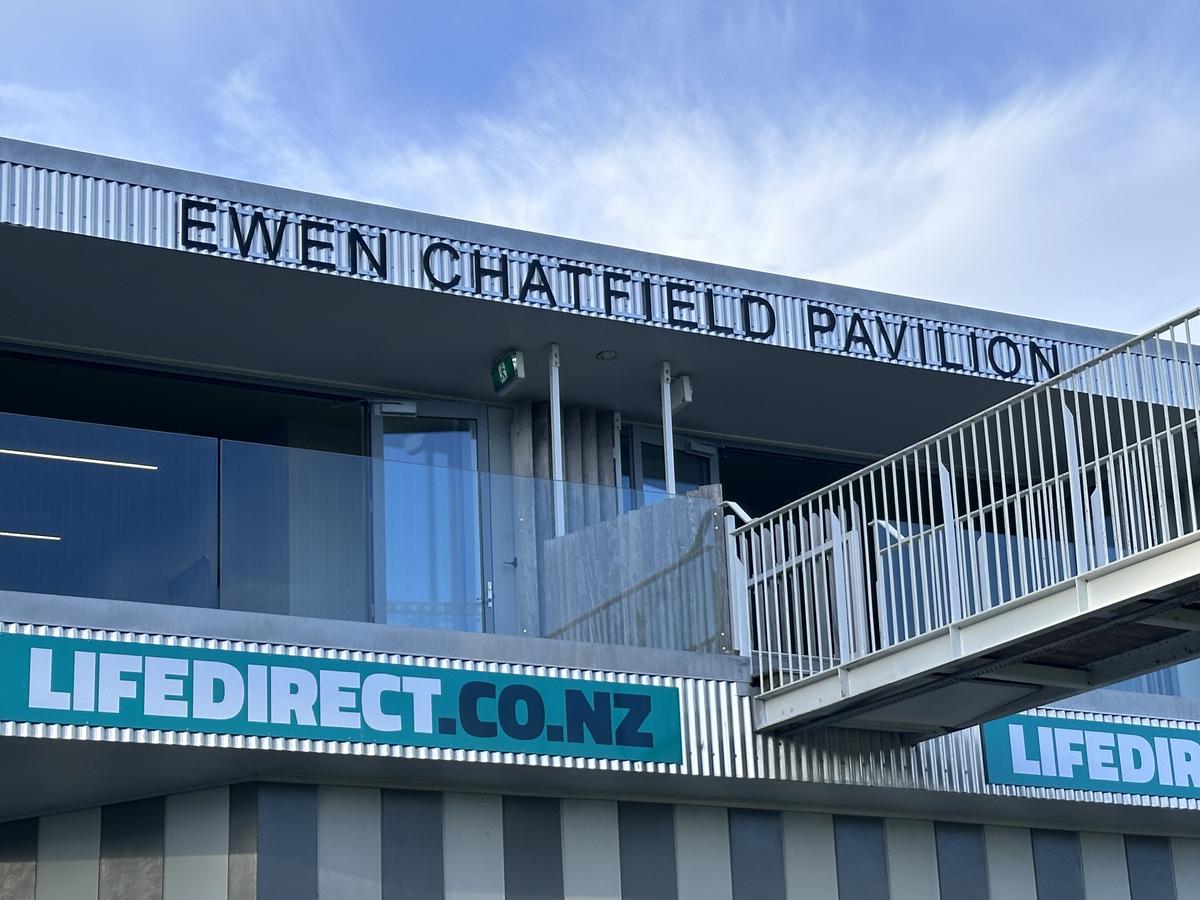
Today, Chatfield’s name is on the pavilion at the Basin Reserve, although its official opening ceremony has never taken place. It was scheduled for 2020, but heavy rain forced its cancellation. The pavilion is still used, but he says he has even had a few run-ins with security guards when trying to enter without the necessary accreditation.
He laughs about it, just as he does when recalling the misfield in Dunedin or the batting plan that somehow left him facing more deliveries than Cairns. There is, however, one thing he is not prepared to negotiate: his decision to stop playing cricket.
“I don’t miss it at all, really,” he says. He has given away his boots and accepted that his playing days are over. But he has not quite reconciled himself to being unable to work. “I should be still working, but I can’t at the moment. So we’ll just see what happens in the next few weeks. It’ll be fine,” he says.
For a man who spent much of his cricketing life doing the hard work at one end while Hadlee attacked at the other, the present challenge is perhaps his most unfamiliar one: waiting patiently for the chance to get back to work. And, at 76, Ewen Chatfield is still not quite ready to call time.
Published on Nov 29, 2026