
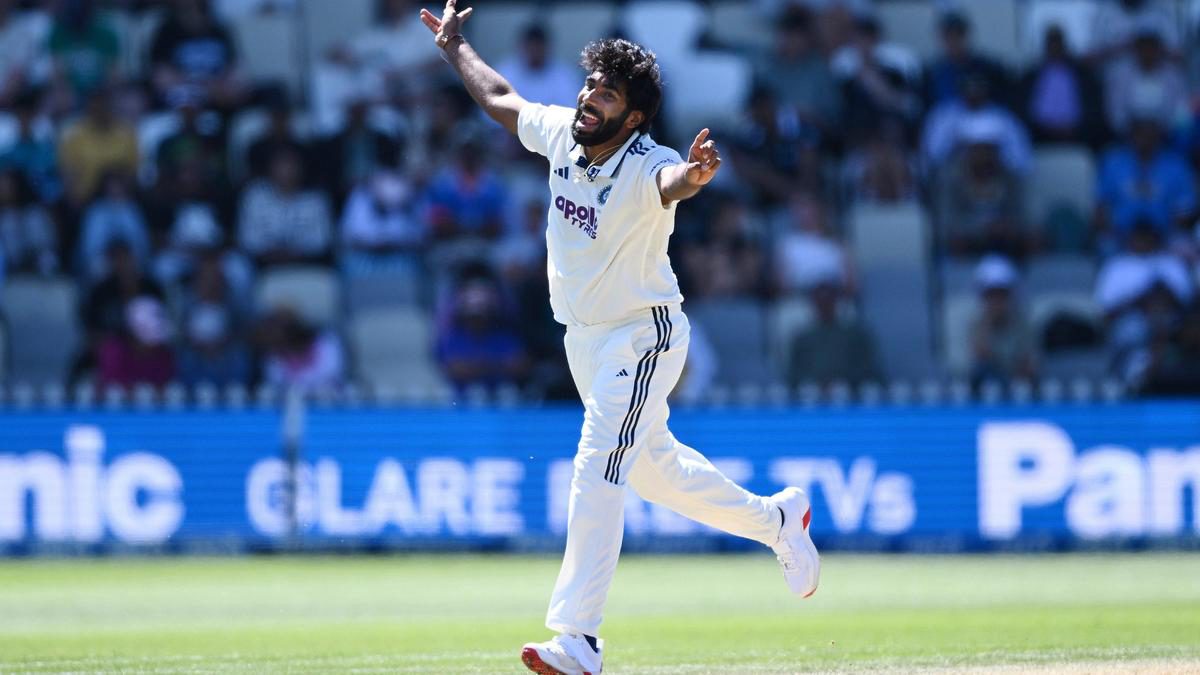
The photograph of John Wright alongside Jasprit Bumrah when the duo met in Lincoln, on the outskirts of Christchurch during India A’s match against New Zealand A, that went viral on social media recently may have offered a reminder of the fast bowler’s extraordinary journey. For the former India head coach, however, the story of how he first came across Bumrah is still a case of being at the right place at the right time.
It was March, 2013. Wright was an integral member of Mumbai Indians support staff, working alongside Anil Kumble, and was travelling around the West Zone to watch matches in the Syed Mushtaq Ali Trophy. With games being played simultaneously at different venues, he had already watched one contest before wandering across to the match between Mumbai and Gujarat in Ahmedabad.
There were only six or seven overs left when a young Gujarat fast bowler caught his attention. What followed was an exhibition of yorker after yorker, delivered with a pace that made Wright stop and take notice.
“I watched him bowl an over. They were all yorkers. He tried to bowl everything as yorkers. And he had a bit of pace,” Wright recalled. One delivery, in particular, stayed with him. It landed in the footmarks at the other end, took off awkwardly and raced away for four byes. It was an indication of the pace the youngster could generate.
Wright decided to stay back and watch another over. The bowler returned and attempted to deliver six more yorkers.
“They were pretty good yorkers. In fact, they were damn good yorkers,” he said. The young bowler was Jasprit Bumrah. But Wright did not know that yet.

At the end of the game, he approached Gujarat captain Parthiv Patel, a player whose judgement he trusted, and asked about the youngster. “I said, ‘Who’s that bloke there?’ He said, ‘Oh, that’s Boom.’ So I asked him what he was like. Parthiv gave him a very positive recommendation. I respected Parthiv. I thought he was a really good captain of his state, very smart,” Wright said.
The endorsement was enough to prompt Wright to make a call to Rahul Sanghvi, then Mumbai Indians team manager and his superior at the franchise. He told Sanghvi about the youngster he had watched. Sanghvi, too, was intrigued.
By the following morning, Mumbai Indians had signed Bumrah. Just to remind you, domestic uncapped players were not a part of the IPL Auction for the first six editions.
“It was more good luck than anything. Sometimes you get lucky. Sometimes it doesn’t work out,” Wright said, while reflecting on the chance discovery that would eventually prove to be one of the most consequential scouting calls in Indian cricket. But identifying a talent and helping him realise his potential are two very different things.
Wright is particularly conscious of that distinction. Bumrah did not immediately become the spearhead of Mumbai Indians’ attack. He played two matches in the 2013 IPL season, and the subsequent years were part of a gradual development process.
Wright remembers another moment from those early days, one that gave him a different kind of reassurance. Mumbai Indians was preparing for its first game against Royal Challengers Bengaluru after signing Bumrah. The entire squad travelled for the nets, and Wright decided to put the young fast bowler up against Sachin Tendulkar.
At the end of the session, Tendulkar walked up to Wright and asked him about the youngster.
“I said, ‘Oh, that’s a young lad called Bumrah. Boom.’ He said, ‘Oh, John. He is very hard to pick up.’ That’s when I was very pleased to hear that,” Wright recalled.
Coming from Tendulkar, that assessment carried considerable weight. The master batter had spent years facing the best fast bowlers in the world and was among the sharpest judges of a bowler’s ability to disguise his deliveries. His observation that Bumrah was difficult to pick up reinforced Wright’s initial impression.
It was not, however, an overnight transformation. Wright points out that player development rarely follows a straight trajectory. Bumrah had to negotiate the demands of professional cricket, learn from different coaches and gradually refine his skills. The Mumbai Indians environment, with several experienced players and coaches around him, provided an opportunity to grow.
“Development is not a smooth curve. It goes in fits and starts,” Wright said.
For Wright, what made Bumrah special was not merely the pace or the ability to execute yorkers. It was the uniqueness of his action, which made him difficult for batters to read. Even as opponents became increasingly familiar with his bowling, Bumrah continued to find ways to stay ahead.
“He has got a unique action. And so, therefore, people may get used to it. But it’s quite special,” Wright said.
The former New Zealand captain is equally impressed by what Bumrah has made of the opportunity that came his way. In a country where competition for places has only intensified, identifying a promising youngster is just the beginning.
“You can pick someone and that provides an opportunity. But then it’s really up to the individual cricketer what they are going to make of that opportunity,” he said.
Bumrah has certainly made the most of his. From a relatively unknown fast bowler representing Gujarat in a domestic T20 competition, he has developed into one of the most accomplished pace bowlers across formats. His ability to deliver at the highest level, whether with the new ball, at the death or in the longest format, has made him indispensable to India.
That sustained excellence is perhaps what Wright admires most. The bowler’s unconventional action, while a major part of his success, also raised questions about the physical demands it placed on his body. Bumrah has endured significant back problems, undergone procedures and suffered multiple interruptions to his career. Each comeback has required careful management of his workload and an understanding of the limits his body can withstand.
For Wright, the answer lies in self-awareness — an attribute he believes separates the truly great players from the rest.
“Anyone, from my coaching experience, that has got the label great beside his name, more than likely they have enormous self-awareness about what they need to do to maintain not only their fitness but their level of performance,” he said.
“I think he is quite humble. And he has got an aptitude to learn,” Wright said. “He has worked with numerous coaches, right through Mumbai Indians. It took three or four years. He has developed over the years.”
The journey has not been without setbacks, but Bumrah’s ability to return from them and continue performing at the highest level has made his career all the more remarkable. For a fast bowler who has had to manage his body as carefully as he has managed opposition batters, longevity has become as significant an achievement as his wickets. Wright, who first spotted him trying to bowl yorkers in the closing overs of a domestic T20 game, is thrilled by how far the youngster has travelled.
“I am thrilled for the guy because he has been a great bowler and is a great bowler,” he said. And, with a hint of regret at having discovered such a talent only when he did, Wright added: “If I am perfectly honest, it would have been wonderful if he had turned up 20 years earlier.”
For the man who gave Bumrah his first opportunity at Mumbai Indians, that may be the ultimate compliment. The youngster he chanced upon in Ahmedabad has not just justified the faith placed in him; he has become the kind of bowler that coaches, captains and batters across the world recognise as exceptional.