
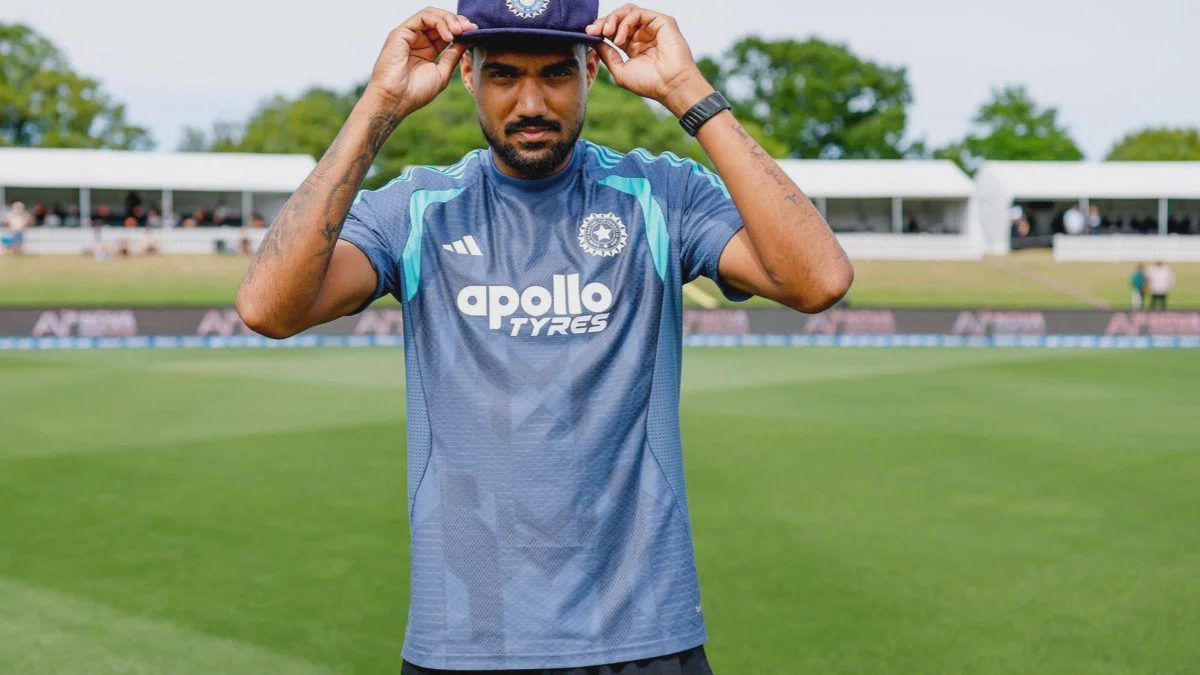
India made a bold call for the second Test against New Zealand in Christchurch on Friday. Captain Shubman Gill won the toss and opted to bowl first on a green-tinged surface at Hagley Oval.
In a major selection move, the team management handed a maiden Test cap No. 321 to young pacer Gurnoor Brar. He received his cap from senior fast bowler Jasprit Bumrah ahead of the toss.
This decision meant senior fast bowler Mohammed Siraj remained on the bench for a second straight match, following his omission from the series opener in Wellington.
Dropping an experienced campaigner like Siraj is certainly a big gamble in an away series. However, current form, local pitch conditions, and recent statistical trends prove that backing Brar is the right move for India. Here are three reasons why:
#1 Superior current form in New Zealand conditions
Gurnoor Brar entered the Test series with great rhythm on New Zealand pitches. During the five-match ODI series earlier in November, the 26-year-old was India’s best bowler.
Brar claimed nine wickets in three completed games at a sharp economy rate of 4.88. His spells included 3/44 in Auckland and a career-best 4/30 in Wellington.
He also proved his red-ball skill earlier in 2026, taking 10 wickets for 145 runs for India A against Sri Lanka A. Overall, Brar has taken 71 wickets in 22 first-class games at an average of 26.41.
Siraj, by contrast, has struggled for form and pace. On India’s recent tour of Sri Lanka, Siraj took just four wickets across two Tests. His speed dropped noticeably in those games.
Gill cited a lack of form when leaving him out of the first Test in Wellington, and bowling coach Morne Morkel noted that Siraj needed to strip back his game and rebuild his rhythm.
#2 Height and bounce suit Hagley Oval
Hagley Oval offers good carry and bounce, especially on the first morning when the pitch holds moisture. Standing at 6 feet 5 inches, Brar brings a physical edge that Siraj cannot match.
Brar hits the deck hard and extracts steep bounce from a good length. That natural height troubles batters on the front foot and turns his short ball into a major threat.
India already have Jasprit Bumrah, Akash Deep, and Anshul Kamboj in the playing XI. Those three rely heavily on seam movement and swing. Adding a tall, hit-the-deck enforcer like Brar gives India a point of difference. It prevents New Zealand’s batters from settling against one type of pace.
#3 Better control with the Kookaburra ball
Test cricket in New Zealand uses the Kookaburra ball, which loses its shine and seam faster than the Dukes or SG balls. Bowlers must attack the stumps with strict discipline before the ball goes soft.
Ahead of the Christchurch Test, Morkel stressed the need to make the new Kookaburra count by hitting the right areas. Siraj has often leaked runs when searching for magic deliveries.
Siraj holds a career Test average of 29.63 across 48 matches, and his recent dip in pace has made him easier to score against when the ball stops swinging.
Brar keeps his method simple. He bowls a full, direct length to bring the stumps into play. With the series tied at 0-0 after a high-scoring draw in Wellington, India need 20 wickets in Christchurch to win the series. Backing a hungry, in-form bowler tailored for the venue gives India their best shot at victory.
Looking for fast live cricket scores? Download CricRocket and get fast score updates, top-notch commentary in-depth match stats & much more! 🚀☄️