
Of late, Test cricket has had an unusual share of draws. It may be too early to call it a trend, but there is probably something in it.
You know what they have been saying for a while, don’t you? The World Test Championship is eliminating the draw from Test cricket.
To be fair, the claim is not misplaced. One, the WTC does de-incentivise the draw by assigning only four points – one-third of the rewards for a win a la football. No host team naturally wanted to draw a Test anymore, and increasingly rolled out pitches that aided their bowlers.
Few raised an eyebrow when only three Tests (a record low count with a 20-Test cut-off) were drawn in 2020. You cannot blame anyone for that in a year that survived an unprecedented global lockdown. In all Test cricket history, 1956 was the only other year with 15 Tests but only three draws.
But that count of three draws was equalled, first in 2024, then in 2025. Neither was a truncated year. In fact, the 53 Tests played in 2024 was only two short of the world record count of 55, set in 2001. All three Tests were hit by rain. The next year, 2025, featured 42 Tests.
Let the numbers sink in a bit. Only six of the 97 Tests were drawn across 2024 and 2025. That is one in 16 Tests and a bit. Now, 16 Tests is a lot of cricket: of the 136 calendar years in which Test cricket has been played, 69 (more than half) have had 16 Tests or fewer.
It was not a coincidence. In years with at least 5,000 six-ball overs of Test cricket, wickets have fallen most often in 2024 (every 47.8 balls) and 2025 (50.8). Even if you remove the cut-off, no year in the last century has a better bowling strike rate.
Not only were wickets falling more regularly, but matches were also ending faster. A Test match in 2024 lasted 273 overs on average, and in 2025, it rose to 282. These two years hold the record for the shortest Tests since the First World War.
But 2024 and 2025 are both in the past. We are in 2026 now, a year with 32 Tests till date. There have already been seven draws, a ratio of matches/draws of 4.57, which is something we had last seen more than a decade ago.
Test cricket by calendar year since 2010
Until the start of second Test, South Africa vs Bangladesh (at Centurion)
As is evident from the table, four of these draws have come since the start of October – in just 12 Tests. Stretch that to August 23 (the last two months, basically) and you get five draws in 15 Tests. What does one make of this?
Are draws back?
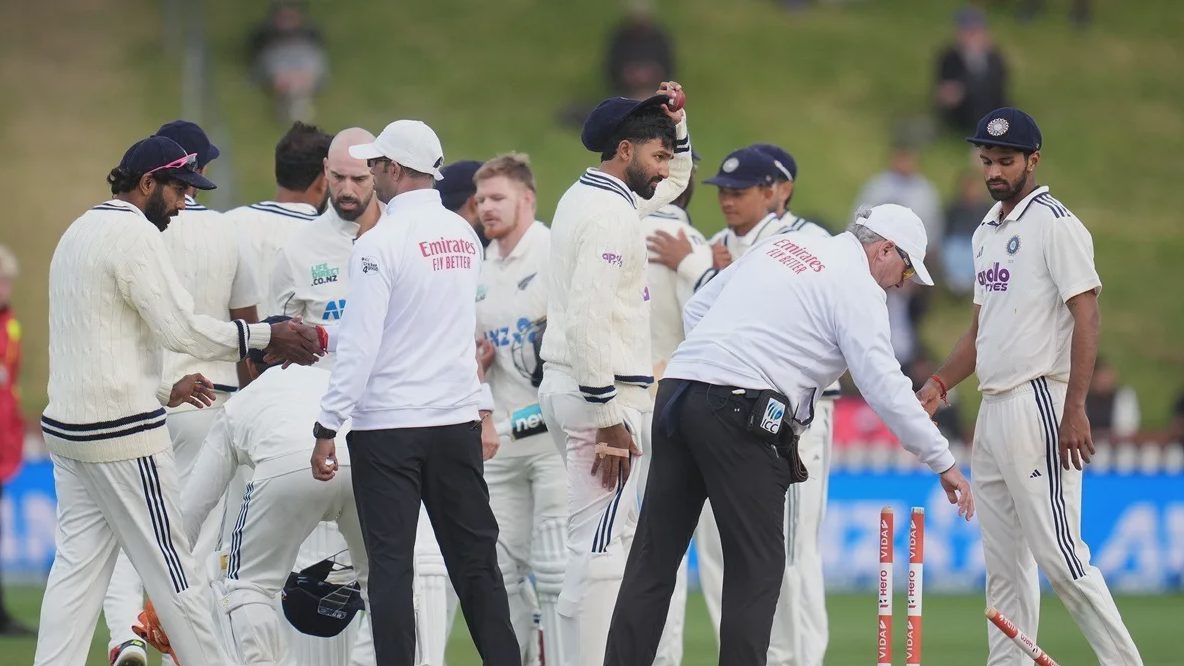
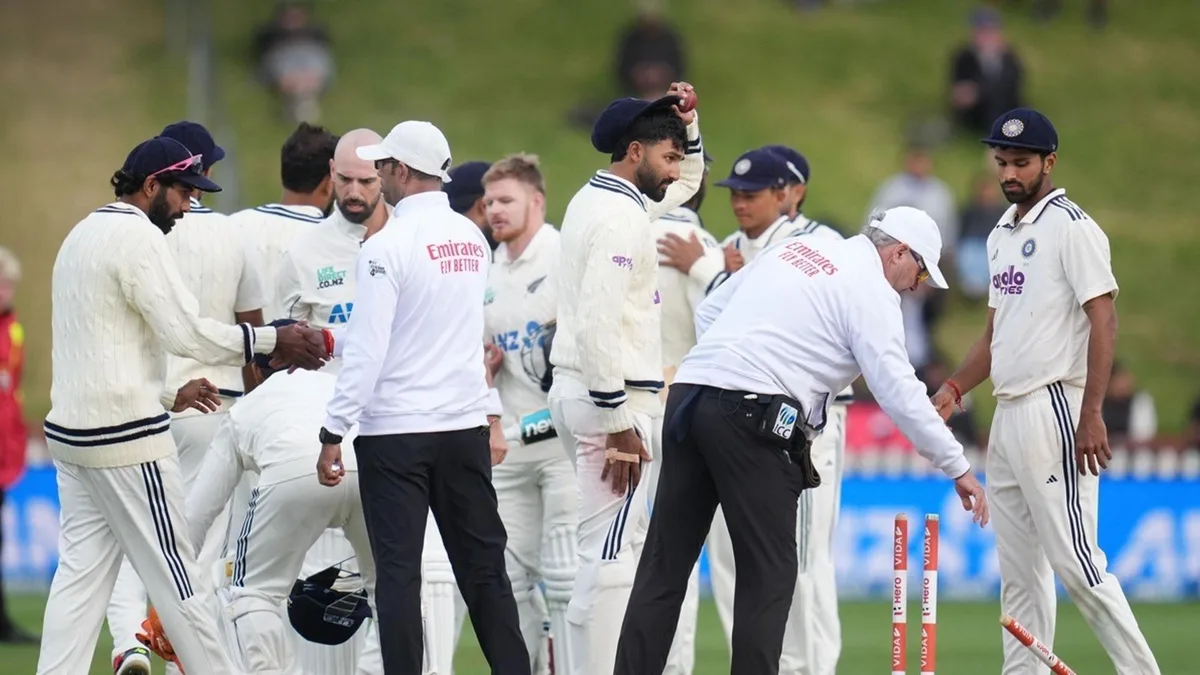
Before drawing a conclusion (pun intended, as they should be), let us delve a bit deeper into the seven draws of 2026. In two of those, India needed four wickets on the final day at the SSC and eight at Wellington: they took three in either case.
Then, Bangladesh had Afghanistan eight down when the umpires removed the bails in Abu Dhabi, and the same side did not show any inclination to chase 369 in under a day against the West Indies in Sylhet.
The other three Tests – West Indies versus Sri Lanka at North Sound, Pakistan versus Sri Lanka at Rawalpindi, Afghanistan versus Zimbabwe at Sharjah – were old-fashioned draws where the outcome was more or less expected when the final day began. Rawalpindi suffered bad light, but despite that, not even 30 wickets fell in that Test.
You may be inclined to classify two or more of the first four Tests as near-results. Some of the actual results were near-draws as well. Of the 25 decided Tests this year, several went into the final day. Of these, Bangladesh-Pakistan in Mirpur, South Africa-Australia in Gqeberha, and Afghanistan-Zimbabwe in Sharjah were decided in the final session.
If some draws were near-results, then some results were near-draws as well: it works both ways. These things often even out in the long run.
All in all, it is fair to say that the percentage of draws have indeed gone up this year, especially over the past two months. Of course, some aspects need to be pointed out here.
Why is this happening?
It can be argued that some of the countries that hosted these draws had no incentive to go for results. Afghanistan (with the UAE as “home”) are not part of the World Test Championship, while Sri Lanka, Pakistan, and the West Indies are not in the race for the final.
Bowler-friendly conditions come with an obvious risk of the home team getting bowled out. This became apparent in 2024 and 2025, both of which are among the top three years in terms of away wins.
Records of teams in away Tests by calendar year (30 Tests)
Until the start of second Test, South Africa vs Bangladesh (at Centurion)
The pattern is difficult to ignore. The top three years are all WTC years, while 2022 and 2023 both feature in the top twenty (2020 falls short of the cut-off).
As is evident, 2026 is not far away from the last two years. After two extreme years of bowling, Test cricket is perhaps reverting to relative “normalcy” of 2022 and 2023.
There is, however, another aspect. Remember we mentioned how 2024 and 2025 topped the balls per wicket list with a 5,000-over cut-off? The ongoing year is fourth on that list, with only 2018 separating it from the two preceding years.
Fewest balls per wickets in a calendar year (minimum 5,000 six-ball overs)
Until the start of second Test, South Africa vs Bangladesh (at Centurion)
Two things are worth noticing here. One, the wickets rate (different from bowling strike rate, since this includes run outs) of 2026 is a throwback to the 2022-2023 period. And two, wickets have never fallen at the WTC rate in the history of Test cricket; and despite the draws, 2026 ranks high even among the WTC years.
Having considered that, it is too early to tell whether the 2024-2025 trend has gone away. But even if it has, Test cricket has at best reverted to 2022-2023, which were also bowling years when pitted against the first 14 decades and a bit of Test cricket.